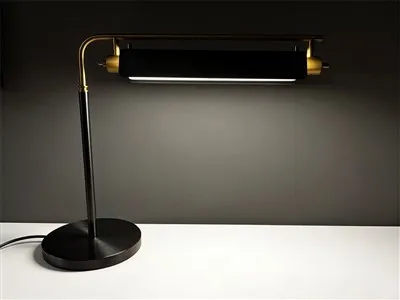
In today's era, energy conservation has become a global concern, and every small step towards reducing energy consumption can make a significant difference. As a supplier of bedroom wall lamps, I've often been asked whether a motion - sensor bedroom wall lamp can save energy. In this blog, I'll explore this question from multiple scientific and practical perspectives.
How Motion - Sensor Technology Works
Motion sensors, also known as occupancy sensors, are devices that detect movement within their range. There are mainly two types of motion sensors commonly used in bedroom wall lamps: passive infrared (PIR) sensors and ultrasonic sensors.
PIR sensors work by detecting the infrared radiation emitted by living beings. Every warm - blooded animal emits infrared energy, and when a person moves within the sensor's field of view, there is a change in the infrared pattern, which triggers the sensor. Ultrasonic sensors, on the other hand, emit high - frequency sound waves. When an object moves, it disrupts the sound waves, and the sensor detects this change.
When integrated into a bedroom wall lamp, these sensors can turn the light on when they detect motion and turn it off when there is no movement for a set period. This automatic on - off function is the key to potential energy savings.
Energy Savings in a Bedroom Setting
In a typical bedroom, traditional wall lamps are often left on for longer than necessary. For example, when a person gets out of bed in the middle of the night to use the bathroom, they might forget to turn off the wall lamp. With a motion - sensor wall lamp, once the person leaves the detection range, the light will automatically turn off after a short delay.
Let's do some simple calculations. Suppose a traditional wall lamp consumes 20 watts of power and is left on for an extra 30 minutes every night. That's 20 watts x 0.5 hours = 10 watt - hours of wasted energy per day. Over a month (30 days), it amounts to 300 watt - hours, and over a year, it's 3600 watt - hours or 3.6 kilowatt - hours. If the cost of electricity is $0.15 per kilowatt - hour, that's an extra cost of $0.54 per year just from this one lamp being left on accidentally.
In contrast, a motion - sensor wall lamp will only be on when needed. Even if it has a small standby power consumption (usually less than 1 watt), the overall energy consumption is significantly reduced.


Impact on Different Bedroom Usage Patterns
The energy - saving potential of a motion - sensor bedroom wall lamp also depends on the user's bedroom usage patterns.
For light sleepers who may get up frequently during the night, a motion - sensor lamp can be extremely useful. Each time they move, the light comes on, and when they settle back in bed, it turns off. This way, they don't have to fumble for a switch in the dark, and energy is not wasted.
On the other hand, for people who sleep through the night without much movement, the motion - sensor lamp may still save energy during the day. For instance, if someone enters the bedroom briefly to pick up something and then leaves, the lamp will turn off automatically, rather than being left on indefinitely.
Quality and Efficiency of Motion - Sensor Wall Lamps
As a bedroom wall lamp supplier, I understand that the quality of the motion - sensor technology is crucial for energy savings. A high - quality motion - sensor wall lamp should have accurate detection and reliable performance.
Some low - quality sensors may have a limited detection range or be overly sensitive, resulting in false triggers. For example, if a curtain moves in the wind and the sensor mistakes it for human motion, the lamp will turn on unnecessarily. This can actually lead to increased energy consumption.
We offer a range of motion - sensor bedroom wall lamps with advanced technology. Our Modern Black Bedroom Wall Lamp features a high - precision PIR sensor that can accurately detect human motion within a wide range. It also has adjustable sensitivity and time delay settings, allowing users to customize the lamp's operation according to their needs.
Compatibility with Other Energy - Saving Measures
Motion - sensor bedroom wall lamps can be part of a larger energy - saving strategy in the bedroom. They can be combined with energy - efficient LED bulbs. LED bulbs consume significantly less energy than traditional incandescent or fluorescent bulbs. For example, an LED bulb with the same brightness as a 60 - watt incandescent bulb may only consume 8 - 12 watts.
In addition, smart home systems can further enhance the energy - saving capabilities of motion - sensor wall lamps. With a smart home system, users can control the lamps remotely, set schedules, and integrate them with other smart devices in the bedroom. For instance, the wall lamp can be set to turn on at a lower brightness during the night to avoid disturbing sleep, and then increase the brightness in the morning as part of a wake - up routine.
Environmental and Cost - Benefit Analysis
From an environmental perspective, reducing energy consumption means less demand for electricity generation. Most electricity is still generated from fossil fuels, which release greenhouse gases into the atmosphere. By using motion - sensor bedroom wall lamps, we can contribute to reducing carbon emissions and mitigating climate change.
In terms of cost - benefit, although motion - sensor wall lamps may be slightly more expensive than traditional wall lamps initially, the long - term savings on electricity bills can offset the higher upfront cost. Over time, users will find that they not only save money but also contribute to a more sustainable environment.
Our Product Range
In addition to the Modern Black Bedroom Wall Lamp, we also offer other stylish and energy - efficient motion - sensor bedroom wall lamps. Our Hotel Fabric Bedside Wall Lamp combines a soft, fabric shade with motion - sensor technology. It provides a warm and cozy atmosphere while saving energy.
The Glass Bedside Decorative Wall Lamp is another great option. Its elegant glass design adds a touch of sophistication to the bedroom, and the motion - sensor function ensures that energy is used efficiently.
Conclusion
In conclusion, a motion - sensor bedroom wall lamp can indeed save energy. Through accurate detection of human motion and automatic on - off control, it reduces unnecessary energy consumption. The energy - saving potential is further enhanced when combined with energy - efficient bulbs and smart home systems.
As a bedroom wall lamp supplier, we are committed to providing high - quality motion - sensor wall lamps that not only save energy but also meet the aesthetic and functional needs of our customers. If you are interested in our products or have any questions about energy - saving lighting solutions, please feel free to contact us for a procurement discussion. We look forward to working with you to create a more energy - efficient and beautiful bedroom environment.
References
- "Energy - Efficient Lighting Technologies" by the U.S. Department of Energy.
- "Occupancy Sensors: How They Work and Their Benefits" in the Journal of Building Automation.
- "The Impact of Smart Lighting on Energy Consumption in Residential Buildings" in the International Journal of Sustainable Energy.