What are the power requirements for public area lamps?
As a supplier of public area lamps, I often encounter inquiries from clients regarding the power requirements for these lighting fixtures. Understanding the power needs of public area lamps is crucial for ensuring optimal illumination, energy efficiency, and cost - effectiveness. In this blog post, I will delve into the various factors that influence the power requirements of public area lamps and provide some insights to help you make informed decisions.
Factors Affecting Power Requirements
1. Size of the Public Area
The size of the public area is one of the primary factors that determine the power requirements of lamps. Larger areas typically require more powerful lamps to achieve adequate illumination. For example, a large lobby in a hotel or a shopping mall will need higher - wattage lamps compared to a small corridor. If the area is expansive, multiple lamps may be needed, and the combined power consumption will be higher.
2. Purpose of the Area
The function of the public area also plays a significant role. Areas where detailed visual tasks are performed, such as reading areas in libraries or display areas in museums, require brighter lighting and thus more power. In contrast, areas like stairwells or storage rooms may need less intense lighting, resulting in lower power requirements. For instance, a museum's exhibition hall needs high - quality lighting to showcase artifacts clearly, so lamps with higher power and better color rendering are often used.
3. Ambient Light Conditions
The amount of natural light available in the public area affects the power needed for artificial lighting. Areas with large windows or high ceilings that allow ample sunlight to enter during the day may require less power from lamps during daylight hours. However, during the night or in areas with limited natural light, more powerful lamps will be necessary to maintain a comfortable level of illumination. For example, a public park with open spaces may rely on natural light during the day but need powerful floodlights at night.


4. Type of Lamp
Different types of lamps have different power consumption characteristics. Incandescent lamps are known for their relatively high power consumption and low energy efficiency. They convert a significant amount of electrical energy into heat rather than light. On the other hand, LED lamps are highly energy - efficient and can provide the same level of illumination as incandescent lamps with much lower power consumption. For example, a traditional incandescent table lamp may consume 60 watts, while an equivalent LED High - end Modern Table Lamp may only use 10 - 15 watts.
5. Lighting Design and Layout
The way lamps are arranged in a public area can impact power requirements. A well - designed lighting layout can distribute light evenly, reducing the need for excessive power. For example, using a combination of general lighting and task lighting in an office space can ensure that only the necessary areas are brightly lit, saving energy. In a hotel lobby, strategic placement of Hotel Decorative Table Lamp can create a warm and inviting atmosphere without over - illuminating the entire space.
Calculating Power Requirements
To calculate the power requirements for public area lamps, a few steps can be followed. First, determine the required illuminance level for the specific area. Illuminance is measured in lux (lx). Different public areas have different recommended illuminance levels. For example, a classroom may require 300 - 500 lx, while a supermarket may need 500 - 750 lx.
Next, calculate the area of the public space in square meters. Then, based on the type of lamp and its luminous efficacy (lumens per watt), estimate the number of lamps needed. The luminous efficacy indicates how efficiently a lamp converts electrical power into light. LED lamps generally have a higher luminous efficacy compared to other types of lamps.
For example, if you have a 100 - square - meter corridor that requires an illuminance of 200 lx, and you are using LED lamps with a luminous efficacy of 100 lumens per watt. First, you need to calculate the total luminous flux required. The formula for luminous flux (Φ) is Φ = E × A, where E is the illuminance in lux and A is the area in square meters. So, Φ = 200 lx × 100 m² = 20,000 lumens.
If each LED lamp has a luminous flux of 1000 lumens, then you will need 20,000 / 1000 = 20 lamps. If each lamp consumes 15 watts, the total power consumption will be 20 × 15 = 300 watts.
Energy - Saving Strategies
As a public area lamp supplier, I am committed to promoting energy - saving solutions. Here are some strategies to reduce the power requirements of public area lamps.
1. Use Energy - Efficient Lamps
As mentioned earlier, LED lamps are a great choice for public areas. They not only consume less power but also have a longer lifespan, reducing the need for frequent replacements. Additionally, some LED lamps can be dimmed, allowing for further energy savings by adjusting the light intensity according to the actual needs.
2. Install Lighting Controls
Lighting controls such as motion sensors, daylight sensors, and timers can significantly reduce power consumption. Motion sensors can detect the presence of people in an area and turn the lights on or off accordingly. Daylight sensors can adjust the intensity of artificial lighting based on the amount of natural light available. Timers can be set to turn off the lights during non - operating hours.
3. Opt for Smart Lighting Systems
Smart lighting systems allow for centralized control and monitoring of all the lamps in a public area. They can be programmed to adjust the lighting based on different scenarios, such as peak hours, off - peak hours, or special events. For example, in a hotel, the smart lighting system can be set to provide a softer, more relaxing light in the evening and brighter light during the day.
Our Product Range
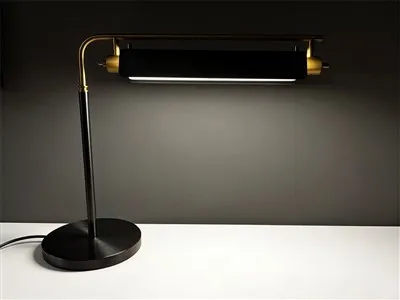
We offer a wide range of public area lamps to meet different power requirements and aesthetic needs. Our Retro Public Area Table Lamp combines classic design with modern energy - efficient technology. These lamps are perfect for creating a warm and inviting atmosphere in public areas such as cafes or restaurants.
Our high - end modern table lamps are not only stylish but also highly energy - efficient. They are suitable for use in luxury hotels, corporate offices, and high - end retail stores. The hotel decorative table lamps are designed to enhance the decor of hotel lobbies, guest rooms, and restaurants while providing optimal illumination with low power consumption.
Conclusion
Understanding the power requirements for public area lamps is essential for creating a well - lit and energy - efficient public space. By considering factors such as the size of the area, purpose, ambient light conditions, type of lamp, and lighting design, you can make informed decisions about the appropriate lamps to use. As a public area lamp supplier, we are dedicated to providing high - quality, energy - efficient lamps that meet your specific needs.
If you are interested in our products or have any questions about the power requirements for your public area lamps, please feel free to contact us for a detailed consultation. We look forward to working with you to create the perfect lighting solution for your public space.
References
- IES Lighting Handbook, Illuminating Engineering Society.
- "Energy - Efficient Lighting for Public Buildings", U.S. Department of Energy.
- "Lighting Design Basics", Lighting Research Center, Rensselaer Polytechnic Institute.